
The Best UK Company Database in 2026: A Buyer's Guide
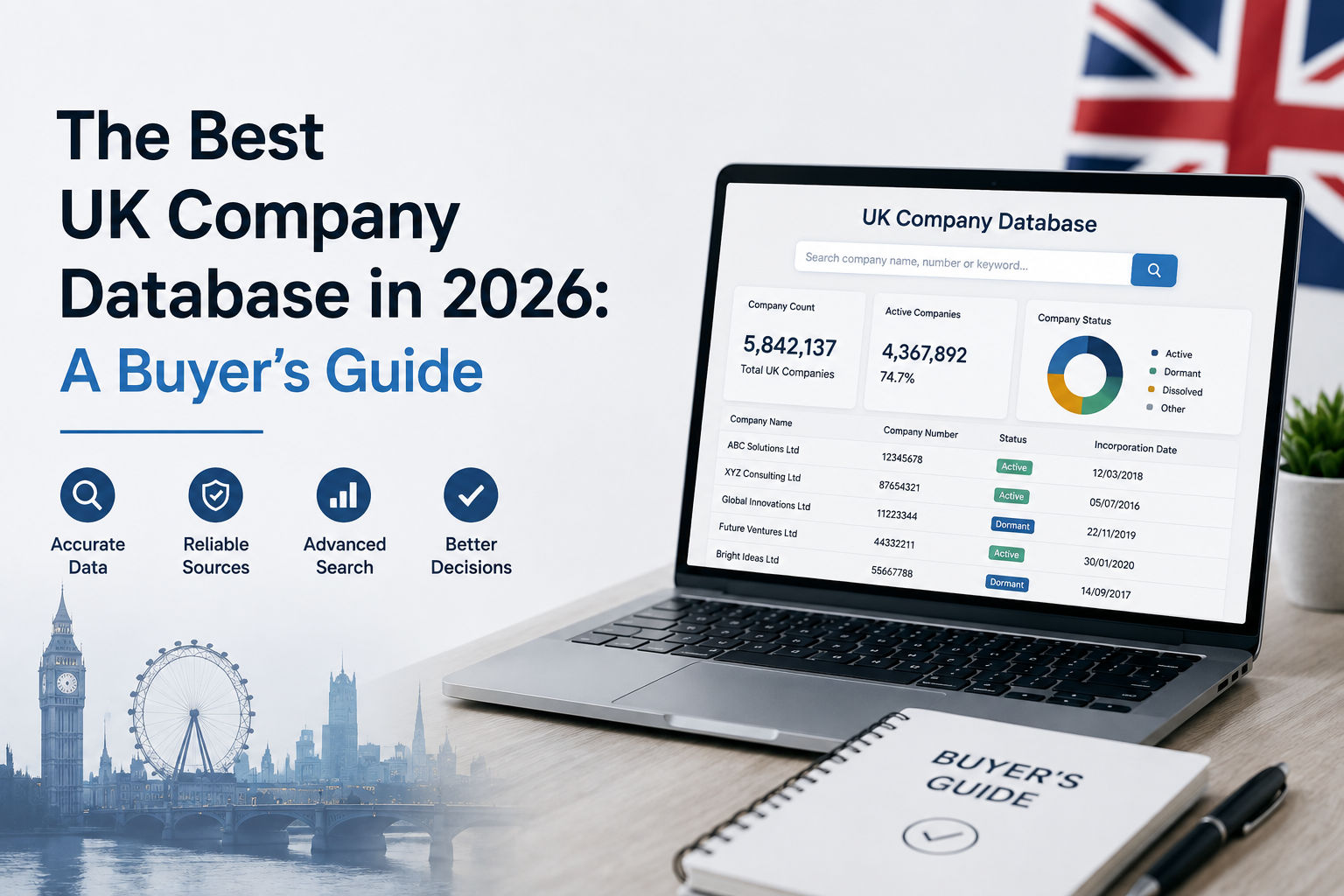
The best UK company database is the one that fits your job — there is no single winner, because "company data" covers everything from a one-off ownership check to building a live sales pipeline. Every option is built on the same free foundation, the Companies House register, and then specialises. This guide breaks the market into its real categories, shows what to evaluate, and helps you avoid paying enterprise prices for a job a cheaper tool does better.
Everything starts with Companies House
The Companies House register is the official, free source: over five million companies with names, directors, people with significant control, SIC codes and full filing history. It is authoritative but built for looking up one company at a time — no bulk filtering, no export, no analysis. Every commercial database layers value on top of it, so the real question is which layer you need. Our UK company database explainer covers the foundation in depth.
The four categories
Most tools fall into one of four buckets:
- Official register — Companies House itself. Free, authoritative, single-company lookups. Best when you just need the facts on one company.
- Financials & credit — tools that turn filed accounts into comparable figures and risk scores. Best for credit decisions and supplier vetting.
- High-growth & funding — curated data on venture-backed and scaling companies. Best for investors and those selling to funded startups.
- Company intelligence & leads — live company data plus new-formation feeds, signals and filtering for prospecting and research. This is where CompaniesIQ sits.
Matching the category to your job is 80% of the decision. A credit tool is wasted on a sales team; an intelligence platform is the wrong tool for a formal credit score.
What to evaluate
Within a category, five things separate a good database from an expensive one:
- Live or a snapshot? Stale data quietly costs you — dissolved companies, resigned directors, old addresses. Ask whether it queries the source live. CompaniesIQ is live-only against the Companies House API.
- Sourcing transparency. A trustworthy provider tells you what is official, what is modelled and what is third-party. CompaniesIQ publishes this on its sources page.
- Filtering & export. Can you slice by SIC code, region and recency the way you actually work? See SIC codes explained.
- Recency & signals. For prospecting, new incorporations and director/ownership changes matter more than a huge static count.
- Price at your volume. Per-report pricing is cheap for occasional checks and ruinous for list-building; a flat subscription is the opposite. Compare on pricing.
Which alternative for which job
- Want the authoritative facts on one company? Use Companies House, or a faster interface over it — see Companies House search alternatives.
- Vetting a customer's finances or credit? A financials-first tool like a Company Check alternative comparison will help you weigh options.
- Sourcing funded startups? Read finding high-growth and funded companies and the Beauhurst alternative comparison.
- Building a sales pipeline from new and changing companies? That is the sales intelligence job — start with new business leads from Companies House.
The honest bottom line
Most serious users combine two tools: Companies House as the source of truth, plus one specialist for the job it can't do — financials, funding, or a live intelligence and leads layer. Decide the job first, evaluate on live-vs-snapshot and sourcing, and only then compare price. If your job is finding and tracking new and growing UK companies, you can search the live register now or get a free weekly email of new companies in your sector.
Frequently asked questions
What is the best UK company database?
There isn't one winner — it depends on the job. Companies House is best for authoritative single lookups; financials tools for credit; specialist tools for high-growth/funding; and intelligence platforms for live data, new-formation feeds and prospecting. Match the category to your task first.
Is there a free UK company database?
Yes — the Companies House register is free and authoritative, covering over five million companies. It's excellent for single lookups but limited for bulk filtering, export and analysis, which is where paid tools add value.
What should I evaluate before buying?
Whether the data is live or a stale snapshot, how transparent the sourcing is, whether you can filter and export the way you work, how good the recency/signals are, and the price at your actual volume.
How much should a UK company database cost?
From free (the register and its API) to per-report pricing to flat monthly subscriptions. Subscriptions suit regular list-building; per-report pricing suits occasional one-off checks. Match the pricing model to how often you'll use it.
More insights
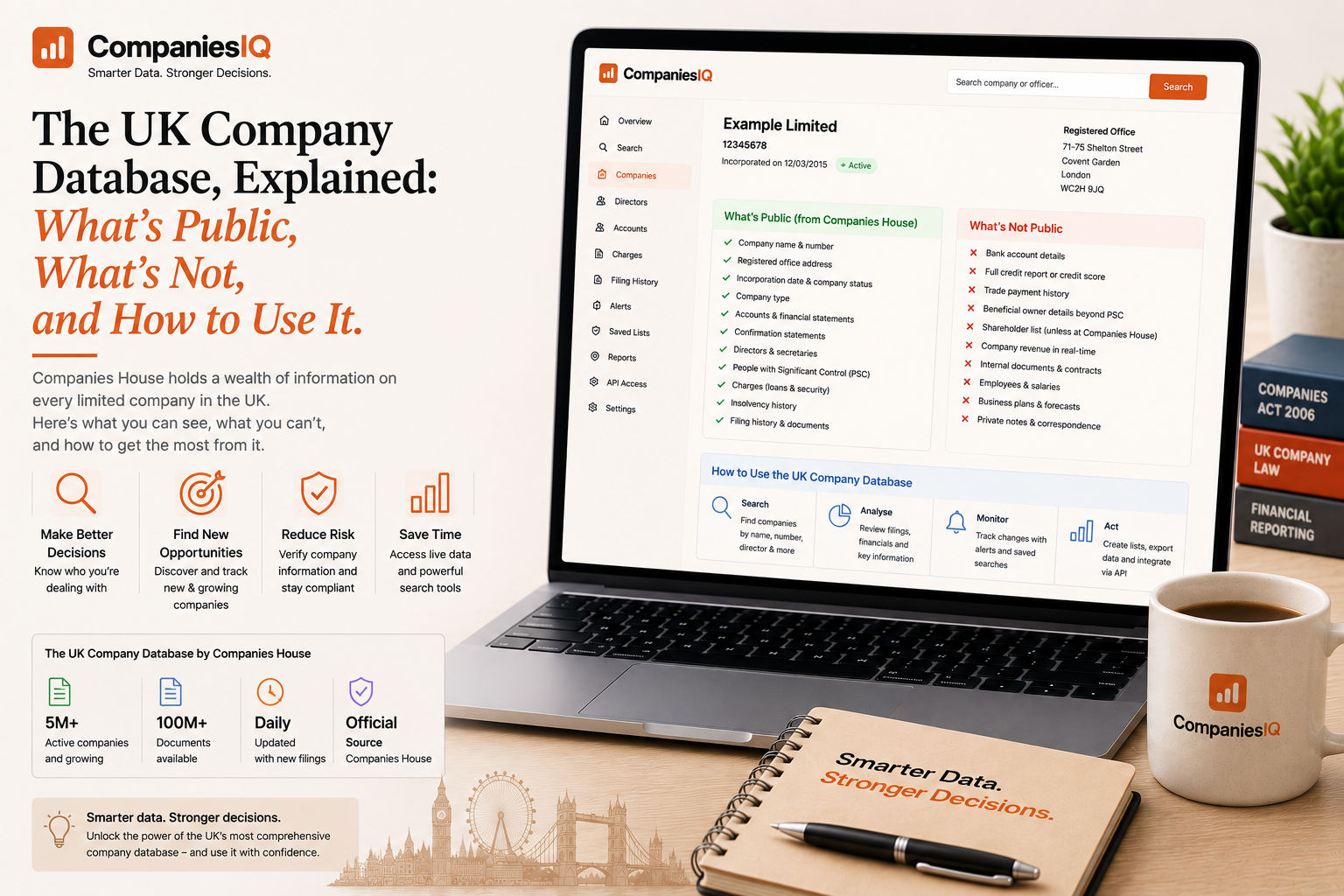
The UK Company Database, Explained: What's Public, What's Not, and How to Use It
What a UK company database actually contains, which parts come free from Companies House, what providers add on top, and how to choose the right one for your job.
Companies House Search Alternatives: When the Free Register Isn't Enough
The free Companies House register is authoritative but built for single lookups. Here are the alternatives — free and paid — and when each one is the right tool.
What Is a Sales Intelligence Platform? A Buyer's Guide for UK Teams
What a sales intelligence platform does, how it differs from a contact database, and what UK teams should look for — including data freshness and provenance.
Go from reading to research
Create a free account to read a full company intelligence report, or upgrade for unlimited access.