
What Is a Sales Intelligence Platform? A Buyer's Guide for UK Teams
A sales intelligence platform gathers, structures and surfaces data about companies and the people who run them, so sales and marketing teams can find the right prospects, reach them at the right time, and have a relevant conversation. It goes beyond a static contact list by adding context — what a company does, how big it is, what has recently changed — and by turning that context into timing signals. For UK teams, the best of these are built on the Companies House register and enriched from there.
What it actually does
A sales intelligence platform typically combines four things:
- Company data — firmographics: industry, size, location, structure, status.
- People data — decision-makers, their roles, and how to reach them.
- Signals — trigger events such as new incorporations, director changes, funding or hiring that indicate a buying window.
- Search, scoring and export — the ability to build a target list, prioritise it, and push it into your CRM or outreach tool.
How it differs from a contact database
A contact database answers "who can I email?" A sales intelligence platform answers "which companies should I approach, why now, and who do I talk to?" The difference is context and timing. A list of 50,000 emails is a commodity; a feed of 200 companies that just incorporated in your sector, with the director named, is an opportunity.
What UK teams should prioritise
The UK market has a specific advantage: an unusually rich, public company register. The platforms that exploit it well share certain traits.
1. Data freshness
Stale data quietly erodes results — dissolved companies, resigned directors, wrong addresses. Ask whether the platform queries source data live or resells a periodic snapshot. CompaniesIQ, for instance, is live-only against the Companies House API.
2. Provenance
A trustworthy platform tells you where each figure comes from — what is official, what is modelled, what is third-party. CompaniesIQ publishes this on its sources page; many providers do not disclose it at all.
3. The right filters
You want to slice by industry, region and recency the way you actually sell — for example new technology companies in London, or construction firms across the North West. Try this on the CompaniesIQ search.
4. Honest contact data
Phone and email enrichment is the most over-promised feature in the category. Treat appended contact data as something to verify, and judge a vendor by how candid they are about accuracy.
5. Workflow fit
Can you export, integrate with your CRM, and set up monitoring? Signals are only useful if they reach the rep in time — see company monitoring and alerts.
Who it is for
Sales intelligence pays off for anyone selling into UK businesses where timing matters: SaaS and B2B sales teams, accountants and advisers, agencies, insurers, brokers and recruiters. The common thread is that a recent change at the target company creates a window — and the platform's job is to put you in it.
The trigger events that signal a buying window
Sales intelligence is only as good as the timing signals underneath it. On the UK register, the highest-value triggers are:
- A new incorporation in your target sector — the freshest opportunity of all. See newly registered companies.
- A director appointment — new leadership often means new budgets and new suppliers; trace it with a company director search.
- A PSC (ownership) change — frequently the footprint of investment. See who owns a company.
- A charge or mortgage — secured borrowing, i.e. capital being deployed.
- Accounts and confirmation statements — confirming the company is live and trading; read them via filing history.
A platform that surfaces these as they happen — rather than a static list you re-work each quarter — is what turns "who could I sell to" into "who should I call this week." See company monitoring and alerts for watching them at scale.
Before you buy
Map your use case to the data you need, then test on real searches. Check freshness, provenance, filters and export against your actual workflow, and weigh it against pricing at your volume. The right platform is the one that surfaces the few hundred companies you should be talking to this week — not the one with the biggest headline database number.
Frequently asked questions
What is a sales intelligence platform?
Software that collects and structures data about companies and decision-makers, adds context and timing signals, and helps sales teams find, prioritise and reach the right prospects at the right moment.
How is it different from a B2B contact database?
A contact database tells you who to email. A sales intelligence platform adds firmographics, decision-makers and trigger events, so you know which companies to approach, why now, and who to speak to.
What should I look for in a UK sales intelligence tool?
Live data rather than stale snapshots, clear provenance of every figure, filters that match how you sell (industry, region, recency), honest contact-data claims, and export or CRM integration.
Is Companies House data used in sales intelligence?
Yes. The public Companies House register is the backbone of UK company data. Platforms build on it with enrichment, signals and easier search, filtering and export.
What trigger events should a sales intelligence platform track?
The highest-value UK triggers are new incorporations, director appointments, PSC (ownership) changes, new charges (secured borrowing), and accounts or confirmation statements. Together they mark when a company's buying window is open.
More insights
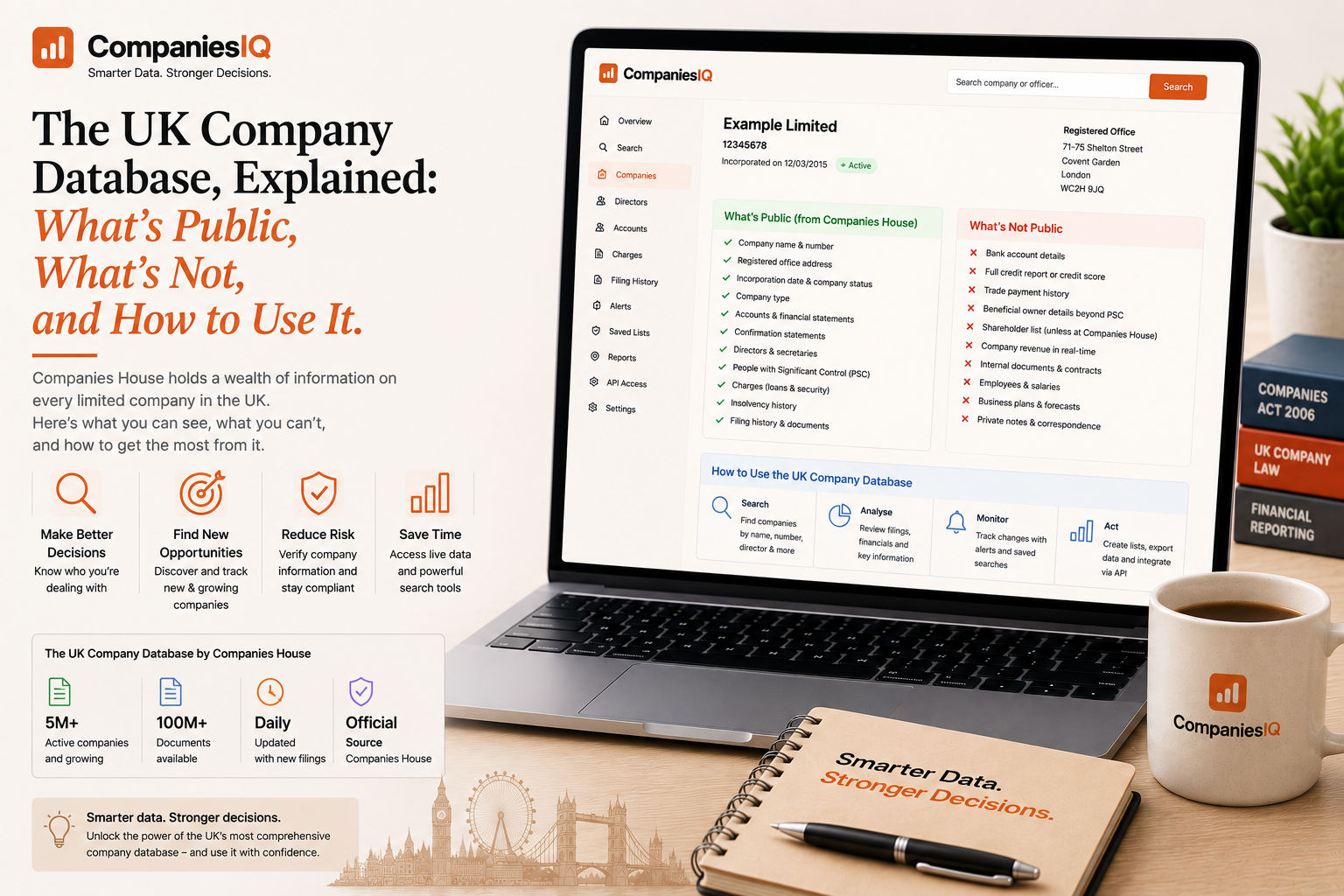
The UK Company Database, Explained: What's Public, What's Not, and How to Use It
What a UK company database actually contains, which parts come free from Companies House, what providers add on top, and how to choose the right one for your job.
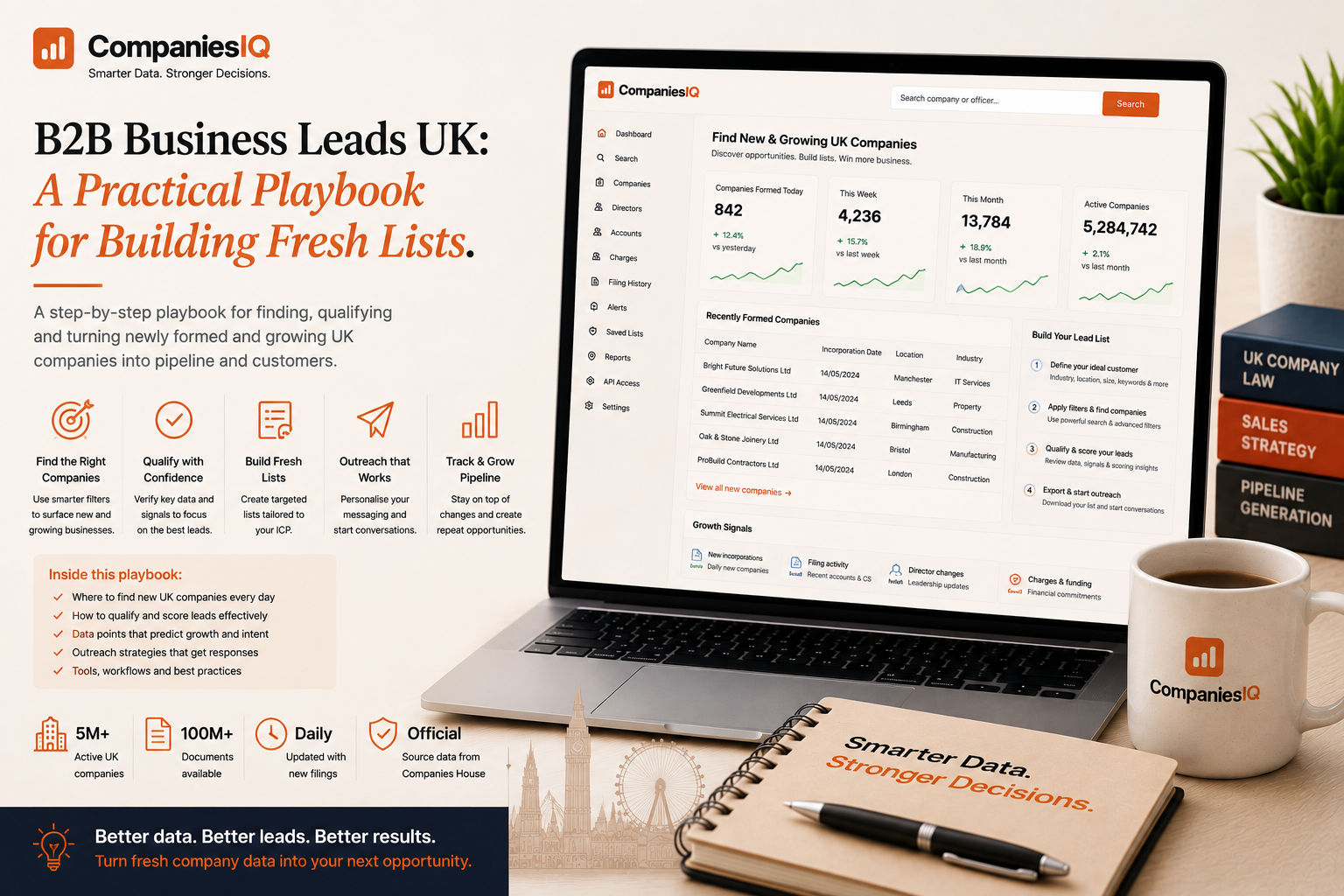
B2B Business Leads UK: A Practical Playbook for Building Fresh Lists
Where UK B2B leads actually come from, how to build a list that converts, and the difference between a bought file and a feed of companies making decisions right now.
Newly Registered Companies UK: How to Find Them (and Why Timing Wins)
A practical guide to finding newly registered UK companies on the public register, the data each one carries, and why the first few weeks after incorporation matter most.
Go from reading to research
Create a free account to read a full company intelligence report, or upgrade for unlimited access.