
B2B Business Leads UK: A Practical Playbook for Building Fresh Lists
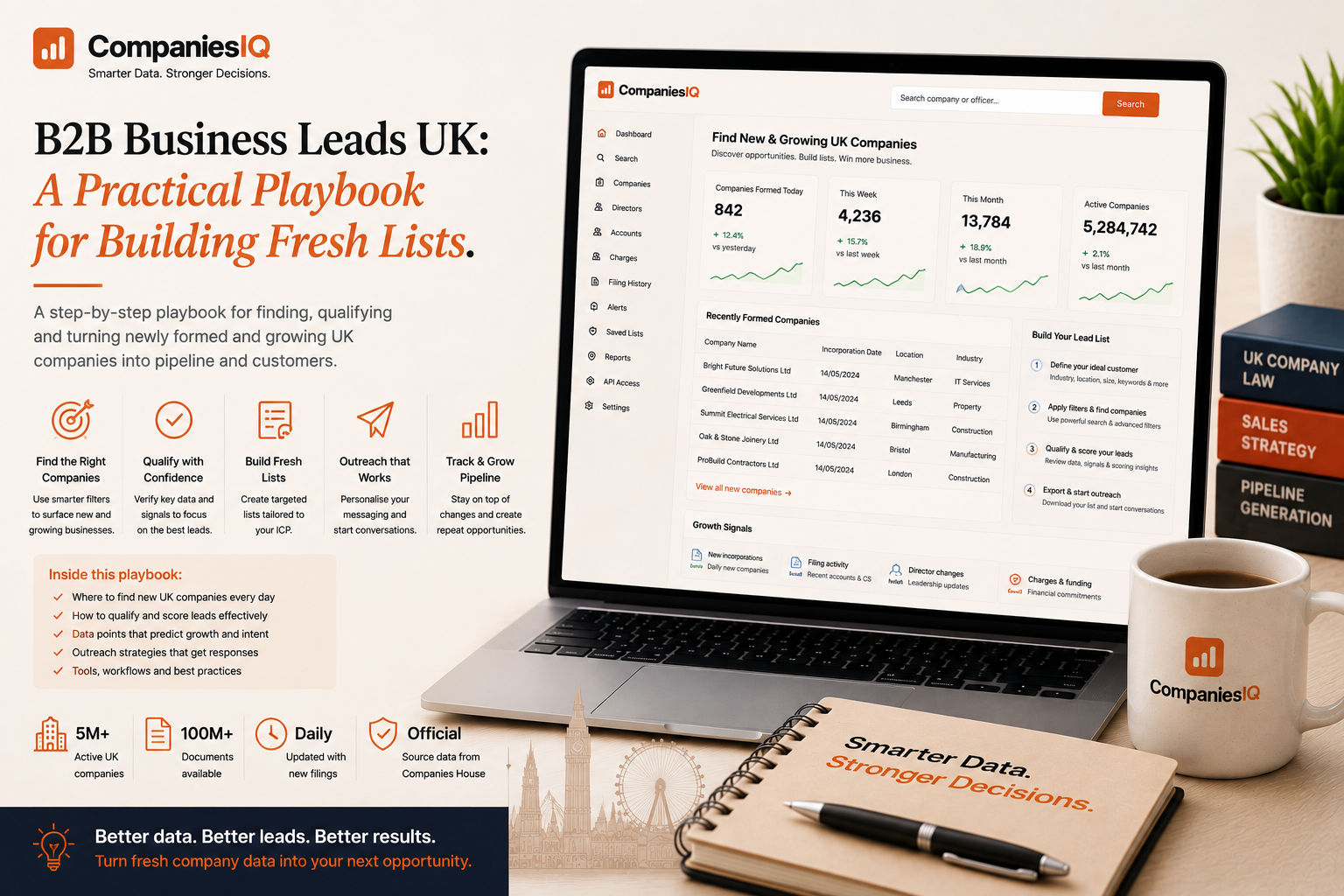
Good UK business leads are not bought in bulk — they are built from public data and timed well. The strongest B2B lists in the UK start with the Companies House register, get narrowed to a specific industry and region, and prioritise companies that have just done something meaningful: incorporated, changed directors, or filed a charge. This playbook covers where leads come from, how to assemble a list that converts, and how to keep it compliant.
Start with intent, not volume
A lead is only useful if the company is likely to need what you sell now. The register gives you intent signals you cannot get from a static list:
- New incorporations — businesses making their first supplier decisions. See newly registered companies.
- Director appointments — new leadership often means new budgets and new vendors.
- Charges and mortgages — a company that has just borrowed is investing in something.
- Confirmation statements and accounts — filing activity confirms the company is live and trading.
Chasing volume gets you a big, cold, contested list. Chasing intent gets you a small, warm, timely one.
Build the list in three filters
The fastest route to a workable list is to layer filters:
- Industry (SIC code). Decide who you serve — for example professional services, construction, retail and wholesale or transport and logistics.
- Region or city. Narrow to where you operate or sell — London, the North West, or a city like Birmingham or Glasgow.
- Recency. Restrict to companies that formed or changed in a recent window, so you reach them while a decision is open.
These three together usually cut hundreds of thousands of records down to a few hundred genuinely relevant ones. You can run exactly this on the CompaniesIQ search.
Qualify before you spend effort
Because the register includes filing history and ownership, you can disqualify weak leads before contact:
- Skip long-dormant shells with no real activity.
- Be wary of registered offices that are clearly formation-agent addresses if you need the real trading location.
- Look at the directors — what else do they run, and does that fit your ideal customer?
Contact data and the honest truth about it
The register gives you the company, the directors and a registered office. It does not give you verified marketing emails or direct dials. Those come from enrichment, and quality varies widely. Treat any appended contact data as a starting point to verify, not gospel — and budget for bounce and wrong-number rates.
Stay on the right side of the rules
UK B2B outreach is governed by PECR and UK GDPR. In practice:
- Keep messages relevant to the recipient's role and business.
- Identify yourself and your company clearly.
- Make opting out simple and honour it immediately.
- Keep a note of why a company is a legitimate prospect.
Used this way, public register data is a strong, defensible foundation for outbound. If your buyers are accountants, agencies or specific sectors, the role-specific guides — accounting leads, marketing agency leads and construction company leads — go deeper.
Frequently asked questions
What is the best source of B2B leads in the UK?
The Companies House register, filtered tightly by industry, region and recency. It surfaces companies making real decisions now, which converts better than broad bought lists that everyone else also works.
Are bought business lists worth it?
Sometimes, for reach. But they age fast, are worked by every buyer, and often have weak contact data. A fresh, filtered list built from the register usually outperforms them on relevance and response.
How do I make a lead list convert?
Narrow on industry and region, prioritise companies with a recent trigger event, qualify out dormant shells, and reach out promptly with a message relevant to that specific business.
Do I need consent to email UK businesses?
B2B email to corporate addresses is allowed under PECR with conditions: be relevant, identify yourself and offer a clear opt-out. Sole traders and some partnerships get stronger protection, so check the recipient type.
More insights
How to Find New Business Leads from Companies House (Free and at Scale)
Companies House is the richest free source of UK business leads — if you know how to turn the register into a filtered, timely prospect list. Here is the method.
What Is a Sales Intelligence Platform? A Buyer's Guide for UK Teams
What a sales intelligence platform does, how it differs from a contact database, and what UK teams should look for — including data freshness and provenance.
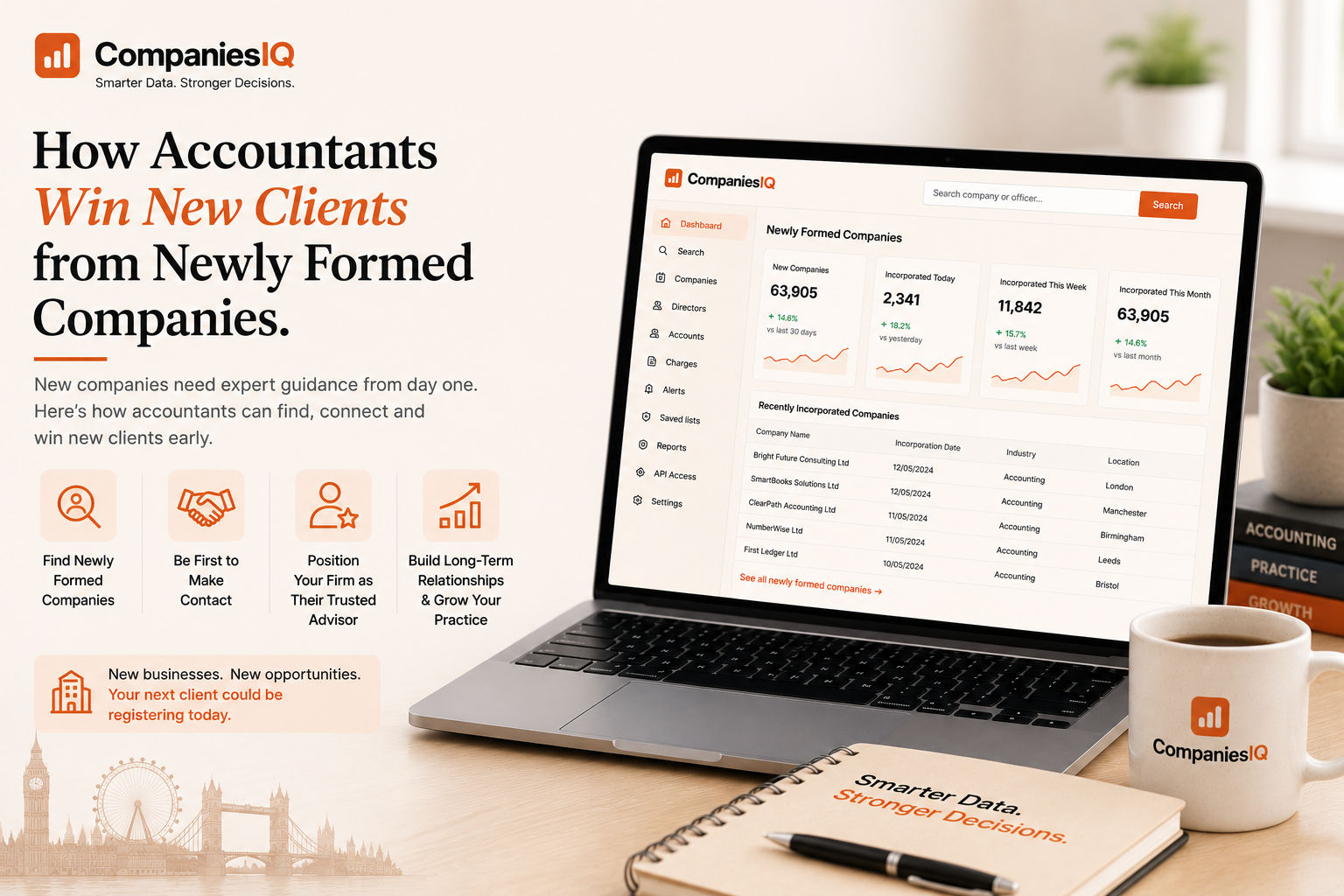
How Accountants Win New Clients from Newly Formed Companies
A focused playbook for accountancy and bookkeeping firms: turning the daily flow of new incorporations into a steady pipeline of qualified, well-timed clients.
Go from reading to research
Create a free account to read a full company intelligence report, or upgrade for unlimited access.