
How Accountants Win New Clients from Newly Formed Companies
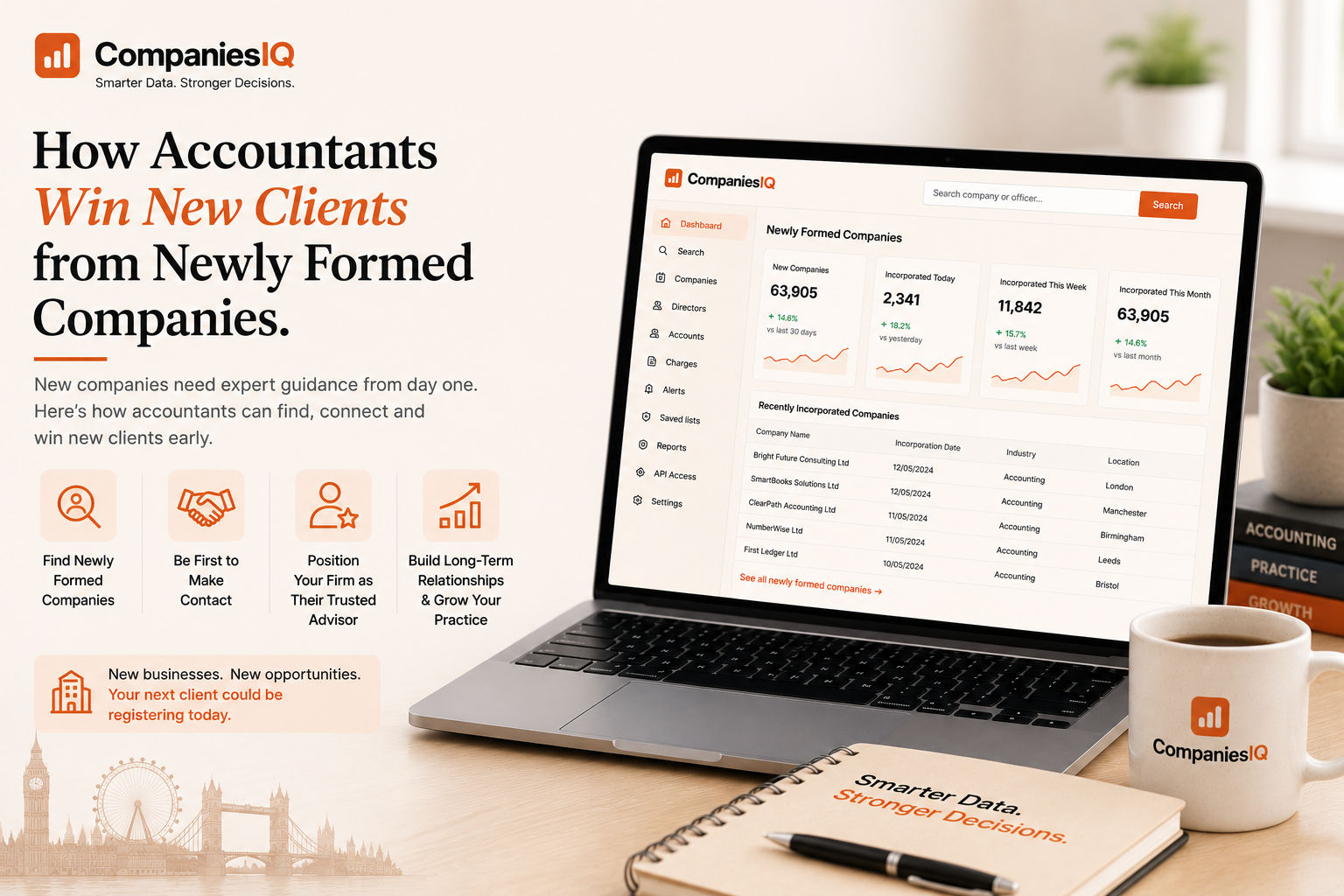
For an accountancy or bookkeeping firm, the most dependable source of new clients is the daily flow of newly formed companies on the Companies House register. Each new incorporation is a business that will shortly need help with software, VAT, payroll, Corporation Tax and its first filings — and that usually has no accountant yet. Turning that flow into a pipeline is a repeatable process: find, filter, time, and reach out with genuine help.
Why new companies fit accountancy so well
The fit is structural. A newly incorporated company has a fixed set of obligations from day one — a confirmation statement, annual accounts, Corporation Tax, possibly VAT and PAYE — and a director who often does not yet understand them. That is precisely the value an accountant adds, and the timing is handed to you by the register. You are not competing to displace an incumbent; you are arriving before there is one.
Find them on the register
When a company forms, the register publishes its name, number, incorporation date, SIC codes, registered office and directors within days — free. That is enough to qualify and personalise. A platform that ingests new formations lets you filter and export rather than checking the website company by company; run it on the CompaniesIQ search.
Filter to your firm
Do not chase every new company. Narrow to where you win:
- Geography — match your practice area: new companies in Manchester, Nottingham, or across Yorkshire and the Humber.
- Specialism — if you focus on a sector, filter to it: construction, hospitality, healthcare and social or professional services. Sector specialism lets you charge more and pitch sharper.
- Recency — keep inside the outreach window below.
Time it right
Aim for roughly one to four weeks after incorporation. Earlier and the founder is mid-setup; later and they have likely chosen an accountant. The sweet spot is when the admin reality lands but no decision is locked.
Lead with help, not a pitch
The firms that convert best give value first:
- A short first-year checklist — confirmation statement, accounts deadline, Corporation Tax registration, VAT thresholds.
- A clear explanation of one thing the founder is probably unsure about.
- A specific, low-friction next step.
Address the director by name, reference their company and sector, and keep it human. A generic "we offer accounting services" email is ignored; a relevant, helpful note from someone who clearly looked them up is not.
Make it a system, not a one-off
The advantage compounds when it is routine: a weekly filtered list of new companies in your area and specialism, a templated-but-personalised first touch, and a simple follow-up sequence. Because the register refreshes daily, the pipeline never runs dry. Consider monitoring specific signals too — see company monitoring and alerts.
Stay compliant
Follow PECR and UK GDPR: relevant outreach, clear identification of your firm, and an easy opt-out. Keep a note of why each company is a legitimate prospect. For the wider context, see newly incorporated companies UK and the UK business leads playbook.
Frequently asked questions
How do accountants get new clients from Companies House?
By monitoring newly incorporated companies, filtering them by location and specialism, and reaching out within the first few weeks with genuine help on their first obligations — before they have appointed an accountant.
What is the best outreach window for new companies?
About one to four weeks after incorporation. The founder is dealing with setup admin and starting to think about compliance, but has usually not yet committed to an accountant.
What should an accountant's first message say?
Lead with value: a short first-year checklist or a clear answer to something the founder is unsure about, personalised to their company and sector, with a low-friction next step — not a generic services pitch.
Is contacting new company directors GDPR-compliant?
Yes, when done under PECR and UK GDPR: keep it relevant, identify your firm and offer an easy opt-out. Take extra care with sole traders, who have stronger protections than registered companies.
More insights
Newly Incorporated Companies UK: A Guide for Accountants and Advisers
Newly incorporated companies are a defined, public pool of businesses about to make their first professional decisions. Here is how advisers can find and reach them.
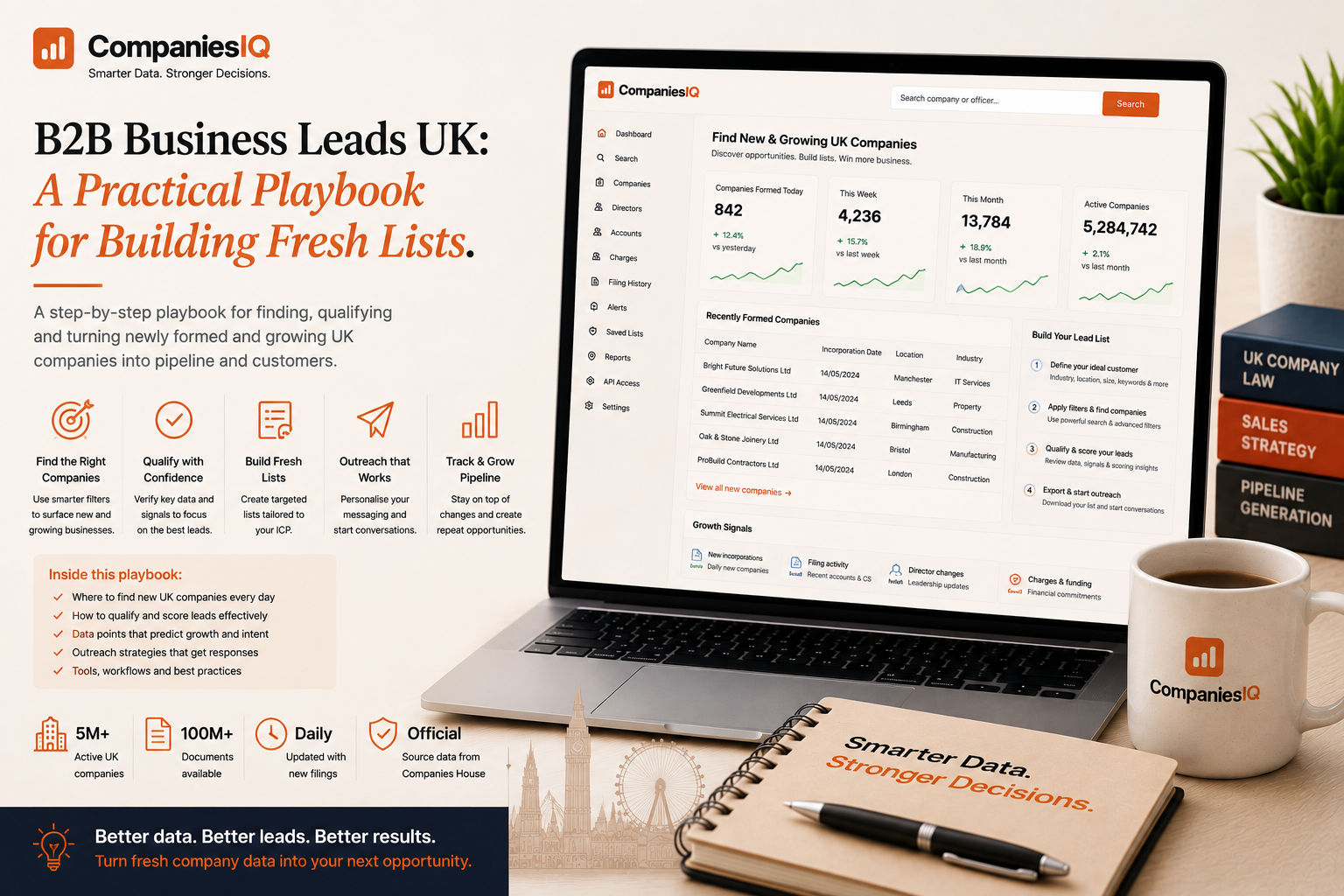
B2B Business Leads UK: A Practical Playbook for Building Fresh Lists
Where UK B2B leads actually come from, how to build a list that converts, and the difference between a bought file and a feed of companies making decisions right now.
.png)
How to Read a Company's Filing History (Accounts, Confirmation Statements & More)
A plain-English guide to reading a UK company's filing history on Companies House — what accounts, confirmation statements, charges and other filings actually tell you.
Go from reading to research
Create a free account to read a full company intelligence report, or upgrade for unlimited access.