
UK Company Status Meanings: Active, Dormant, Dissolved & More
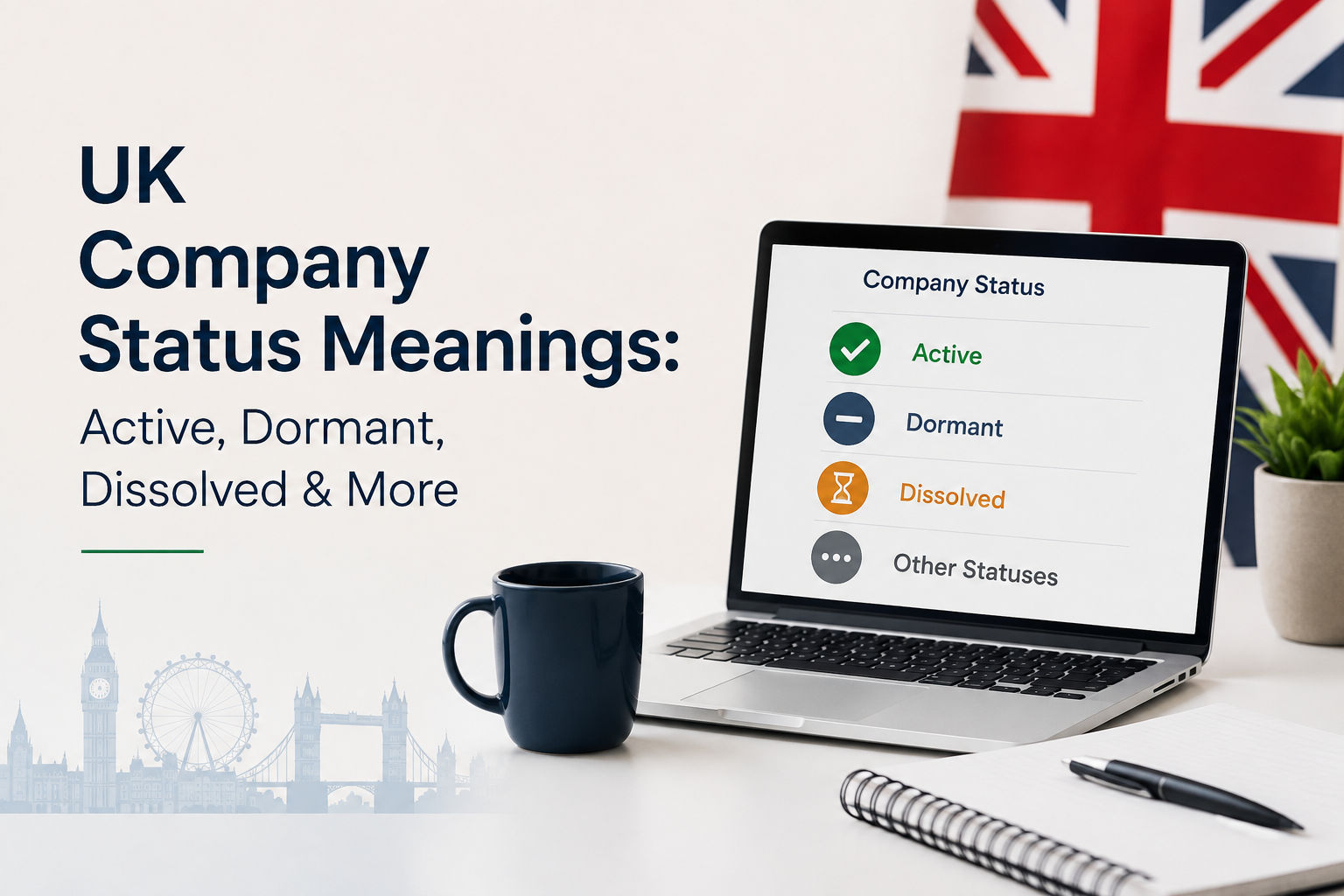
A company's status on the Companies House register tells you, at a glance, whether it's a going concern, paused, closing down or already gone. Getting the status right is the first step in any company check — an "active" company is a prospect; a "dissolved" one no longer exists. Here's what the main statuses mean and how to read them.
Active
The company is registered and has not been dissolved or moved into an insolvency process. Active is the normal state for a trading company — but note it doesn't by itself prove the company is trading or healthy; a company can be active yet overdue on its accounts. Pair status with the filing history for a fuller picture.
Dormant
Dormant means the company has had no significant accounting transactions in the period and files dormant accounts. It's not a warning sign in itself — companies stay dormant to hold a name, protect a brand, or wait for a future plan. A company moving out of dormancy can be an interesting signal that it's starting to trade.
Dissolved
Dissolved means the company has been removed from the register and no longer legally exists. It can't trade, and its assets may pass to the Crown. If you're looking at a dissolved company, you're looking at history — useful for background, but not a live prospect. Directors of dissolved companies can, of course, form new ones — see company director search.
In liquidation
Liquidation is the process of winding a company up and distributing its assets, usually because it's insolvent (though solvent liquidations also happen). A company in liquidation is closing down; treat it as a risk signal for anything forward-looking.
In administration
Administration is a rescue or protection process run by an appointed administrator, often to try to save the business or get a better result for creditors than immediate liquidation. It signals serious financial distress, but the outcome isn't always closure.
Proposed to be struck off
This status means a company is on the path to being struck off the register — sometimes because it applied to close, sometimes because it failed to file. If it proceeds, the company will be dissolved. An unexpected proposed strike-off on a company you deal with is worth investigating.
Why status is the first check
Whatever you're doing — researching a company, building a prospect list, or vetting a supplier — status filters the register into "still here and trading" versus "closing or gone." When you search the live register, you can filter to active companies so your list only contains businesses that still exist. To be told when a company you track changes status — say from active to liquidation — see company monitoring.
Frequently asked questions
What does 'active' mean on Companies House?
That the company is registered and hasn't been dissolved or placed in an insolvency process. It's the normal state for a trading company, but doesn't by itself prove the company is trading or financially healthy — check its accounts and filing history too.
Does dormant mean a company is closed?
No. Dormant means the company has had no significant accounting transactions in the period and files dormant accounts. Companies stay dormant to hold a name, protect a brand or wait for a plan. A company leaving dormancy can signal it's starting to trade.
What's the difference between dissolved and in liquidation?
A company in liquidation is being wound up but still exists during the process; a dissolved company has been removed from the register and no longer legally exists and can't trade. Liquidation often precedes dissolution.
What does 'proposed to be struck off' mean?
The company is on the path to being removed from the register — either because it applied to close or because it failed to meet filing obligations. If the process completes, the company is dissolved. It's worth investigating on a company you deal with.
More insights

How to Research a UK Company: A Step-by-Step Guide
A practical, step-by-step way to research any UK company from public data — its people, ownership, finances, filings and red flags — and what each source tells you.

Company Accounts Explained: Dormant, Micro-Entity & Small
What UK company accounts are, why the level of detail varies by company size, and how to read dormant, micro-entity and small-company accounts on the register.
.png)
Company Director Search UK: How to Find Directors (and What the Record Shows)
How to find the directors of any UK company, what the public record reveals about each one, and how to use officer data for research, due diligence and prospecting.
Go from reading to research
Create a free account to read a full company intelligence report, or upgrade for unlimited access.