
Company Director Search UK: How to Find Directors (and What the Record Shows)
.png)
To find the directors of a UK company, search Companies House for the company and open its "People" tab, or search a person's name and use the "Officers" filter to see every appointment they hold. Both are free. The public record shows each director's name, role, appointment (and resignation) dates, partial date of birth, nationality, country of residence and now their identity-verification status. Here is how to do it well and what each field actually means.
Two ways to search
There are two distinct director searches, and they answer different questions:
- Company to directors. You know the company and want its board. Look it up on the Companies House register and open the People section. You will see current and resigned officers, with appointment dates and roles.
- Director to companies. You know a person and want everything they run. Search their name and select the Officers filter. Companies House returns all current and former appointments — invaluable for spotting serial directors, group structures and patterns across dissolved companies.
What the officer record shows
For each director you can typically read:
- Full name and any former names
- Role — director, secretary, LLP member
- Appointment date, and resignation date if they have left
- Date of birth — month and year only, for privacy
- Nationality and country of residence
- Correspondence (service) address — often an office or agent, not a home
- Identity verification status — see below
The identity-verification change
Under the Economic Crime and Corporate Transparency Act, Companies House has introduced mandatory identity verification for directors and people with significant control, which began rolling out from late 2025. Over time this means the people named on the register are verified rather than self-asserted — a real improvement in the reliability of director data for due diligence and KYC.
What it is good for
Director data drives several jobs:
- Due diligence. Before you contract with or invest in a company, check who runs it and what else they are involved in. Cross-reference the Director Disqualification Register to confirm no one is barred.
- Ownership context. Directors run a company; people with significant control own it. The two often overlap but not always — see who owns a company in the UK.
- Prospecting. Knowing the decision-maker's name lets you address outreach correctly. Combine with sector and region filters on the CompaniesIQ search.
- Monitoring. Director appointments and resignations are strong signals — covered in company monitoring and alerts.
Use the data responsibly
Officer details are public for transparency, not for spam. A few principles:
- Treat correspondence addresses as business contact points, not invitations to contact someone at home.
- For outreach, follow PECR and UK GDPR — relevance, identification and easy opt-out.
- Remember the date of birth is deliberately partial; do not treat the register as an identity-theft resource.
Used properly, a director search is one of the most powerful free tools in UK business research — connecting people, companies and history in a way no single document can. To find directors within a specific market, start from a sector like technology or a city like Manchester.
Frequently asked questions
How do I find the directors of a UK company for free?
Search the company on Companies House and open the People tab. It lists current and resigned directors with their roles and appointment dates, free and without an account.
Can I search for every company a person is a director of?
Yes. Search the person's name on Companies House and use the Officers filter. It returns all current and former appointments, including roles in dissolved companies.
What personal details of a director are public?
Name, role, appointment and resignation dates, month and year of birth, nationality, country of residence and a correspondence address. Full dates of birth and home addresses are protected.
Do UK directors have to verify their identity now?
Yes. Under the Economic Crime and Corporate Transparency Act, identity verification for directors and people with significant control became mandatory, rolling out from late 2025, improving the reliability of officer data.
More insights
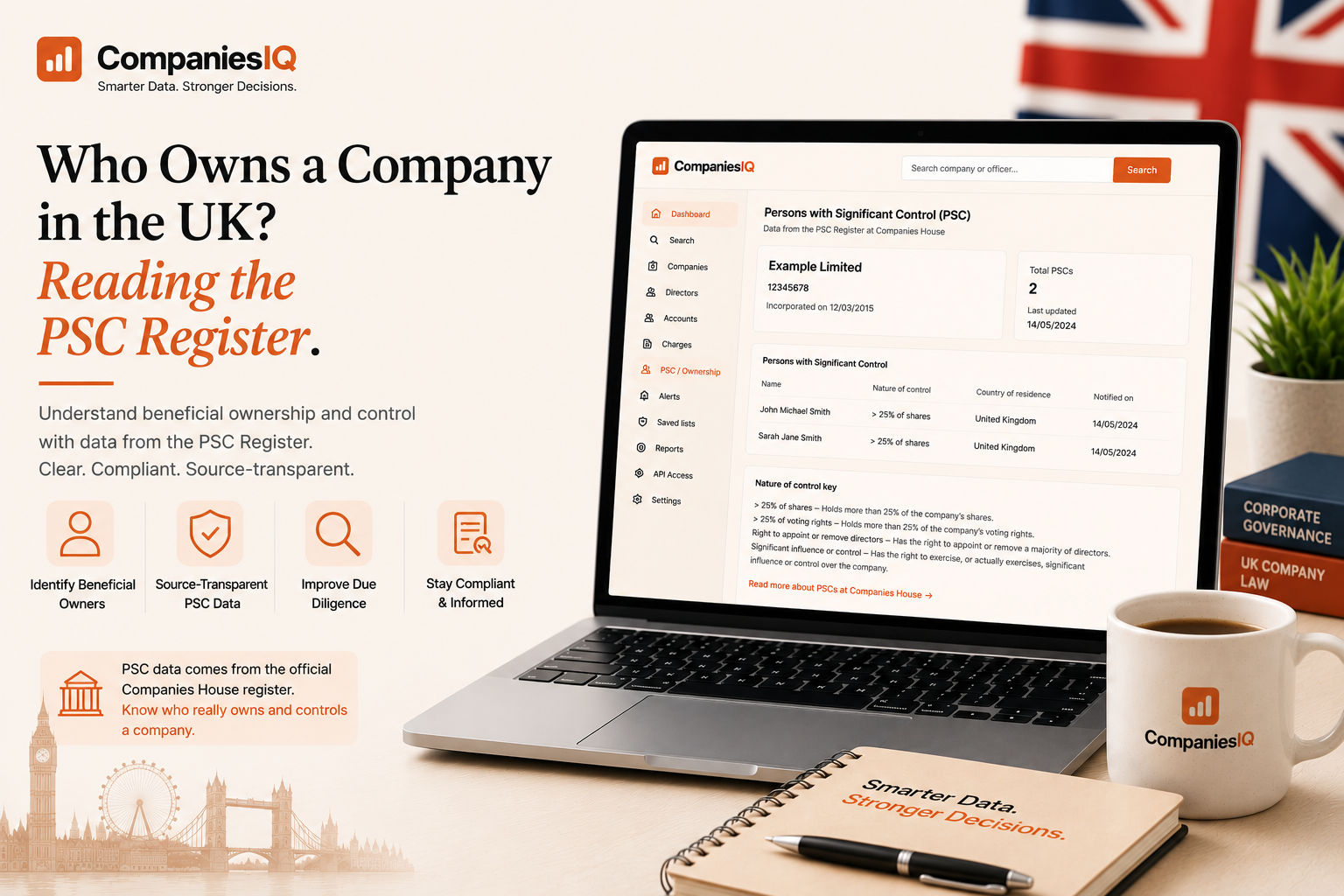
Who Owns a Company in the UK? Reading the PSC Register
How to find out who really owns and controls a UK company using the People with Significant Control register — what it shows, its thresholds, and its limits.
Company Monitoring: How to Get Alerts on Directors, Filings and Changes
How to monitor UK companies for director changes, filings and other events — from the free Companies House 'Follow' feature to systematic watchlists and signals.
.png)
How to Read a Company's Filing History (Accounts, Confirmation Statements & More)
A plain-English guide to reading a UK company's filing history on Companies House — what accounts, confirmation statements, charges and other filings actually tell you.
Go from reading to research
Create a free account to read a full company intelligence report, or upgrade for unlimited access.